

Grays: Just Black & White
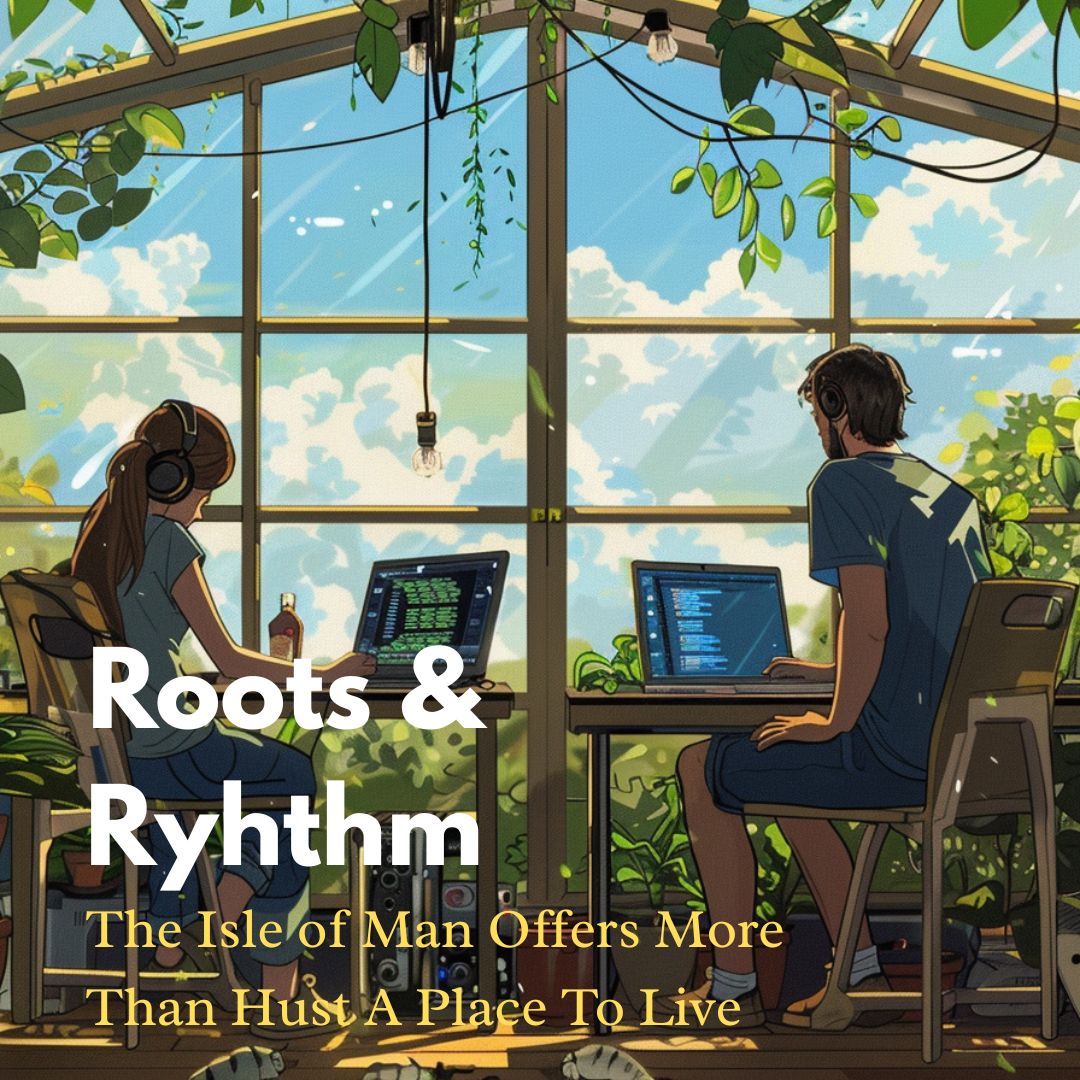
Roots & Rhythm: Rethinking Island Life in an Accelerating World
As the world speeds up, some are quietly choosing to slow down — and in doing so, they may just be moving ahead of the curve.
We live in a time where remote working and AI-driven change are reshaping not just how we work, but where we live, and more importantly, why. Across the UK and globally, there’s a discernible shift: those willing to step outside their comfort zones are unlocking richer ways of living. The Isle of Man is perfectly poised to embrace this moment — if we have the vision to see it.
Historically, life here has been defined by proximity: to school, to grandparents for childcare, to familiar networks. That’s human nature, and it builds strong local bonds. But it also fosters an invisible inertia. People hesitate to move beyond their immediate radius — not because they can’t, but because infrastructure, transport, and ingrained habits subtly discourage it.
Consider this: on an island of this size, why haven’t we embraced smarter mobility solutions? The absence of flexible, app-based transport, Uber or its equivalent, is not just an inconvenience — it limits freedom of choice. It constrains housing demand. It locks some villages into cycles of lower economic activity and restricts younger people from living more independently across the island.
Yet if embraced, this simple enabler could transform access to education, work, and community life — especially as flexible and hybrid work patterns become the norm.
The same shift is happening in how we think about food, wellness, and community. The UK’s growing obsession with field-to-fork and regenerative agriculture is no passing trend; it speaks to a hunger for authenticity and connection in an increasingly digital and disposable world. The Isle of Man, with its abundant coastline, glens, rivers, farms, and artisan producers, is perfectly placed to lead in this space.
But convenience remains the great seducer. The temptation of cheap, processed alternatives and instant gratification undermines longer-term well-being. That’s not just a public health issue — it’s a cultural one. As agents, as professionals, as citizens, we should be championing local supply chains, promoting slow food, and encouraging self-sufficiency — not in a nostalgic sense, but in a future-facing one. In an AI-saturated future, what is handcrafted, rooted, and real will carry premium value.
Yet there’s a broader point here: island life cannot — and should not — compete with global urban centres on speed. Nor should it try. Its power lies in offering something they increasingly can’t: depth, connection, belonging.
Entrepreneurs and professionals globally are awakening to this. The ones moving here, the ones making this choice, are not looking to replicate London life on a smaller scale. They are seeking space to think, to create, to build with intention. They want strong communities, a healthier balance with nature, and opportunities to contribute meaningfully.
Interestingly, in recent conversations with entrepreneurs who have made that move to the Island, a subtle tension begins to emerge. There is admiration for what exists here — but also frustration. A sense that the pace of government response to global economic shifts, particularly around inward investment and high-net-worth migration, does not always match the opportunity.
As capital and talent continue to exit the UK, destinations like Dubai have moved decisively to capture that flow. It raises a fair question: has the Isle of Man done enough to position itself clearly and competitively? Are the incentives understood, visible, and compelling enough to those looking for their next base?
And yet, perhaps this is where the Island’s paradox reveals itself.
Because the very thing that creates that frustration — the slower pace of change — may also be its greatest strength.
In a world of constant reaction, rapid policy swings, and economic noise, the Isle of Man offers something increasingly rare: stability. A place that feels, to many, like the UK used to feel. A sense of continuity. Of community. Of measured progress rather than reactive change.
For some, that is not a weakness — it is precisely the appeal.
For government, this presents both challenge and opportunity. Ambitious population growth targets are welcome, but infrastructure — transport, planning, housing — must evolve with intent. A more fluid island, one where it is easier to move between villages and towns, where public and private sectors collaborate more dynamically, and where local enterprise is actively enabled — this is the model that will attract and retain the next wave of talent.
For us as agents and connectors within the property market, the role is clear: help people see the possibilities, not just the constraints. Encourage them to look beyond familiar postcodes. Support local businesses through every part of the housing journey. And quietly challenge the narratives that keep people thinking small.
Because if we do this well, the Isle of Man can become more than a refuge from the chaos of the wider world. It can become a beacon of what comes next — a place where deep roots meet modern rhythm, and where humans, not machines, define the quality of life.
The opportunity is there.
The question is not whether the Island can evolve — but whether it chooses to do so at the right pace.
You might also be interested in

May 19, 2025
Isle of Man Property Market 2025: What the Numbers Are Telling Us
As we hit mid-2025, confidence is quietly building across the Isle of Man’s property market. Whether you're an investor, homeowner, or just keeping an eye on where things are heading, the message is c

Dec 17, 2024
First-Time Buyers: Your Top Questions Answered!
"First-Time Buyers: Your Top Questions Answered!" Buying your first home is a rollercoaster - equal parts excitement and stress. It’s not just about mortgages and deposits; it’s about creativity, reso